





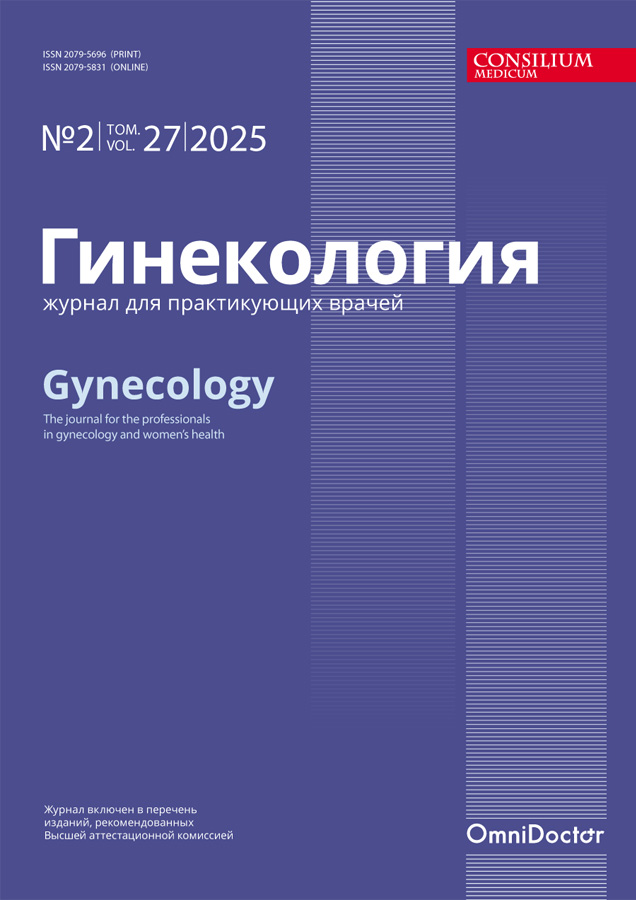
Gynecology

About
Gynecology is the peer-review journal dedicated to providing the very latest information in clinical and research fields related to a wide range of topics in obstetrics, gynecology and women’s health.
The journal publishes editorial conference updates, original research, reviews, clinical case reports, commentaries, clinical and laboratory observations by Russian and international authors, pertinent to readers in CIS countries and around the world.
The Journal emphasizes vigorous peer-reviewing and accepts papers in Russian and English with most rapid turnaround time possible from submission to publication. Abstracts for all papers are available in both languages.
It has served the interests of gynecologists, endocrinologists and all other professionals in gynecology and women's health by providing on bimonthly basis clinical information and practical recommendations to various aspects in the field of women's health.
Special area focus/ journal sections:
- Inflammatory diseases of the pelvic organs
- Endometriosis
- Contraception
- Pregnancy failure
- Hysteromyoma
- Current methods of diagnosis and treatment
The journal welcomes papers both from researcher and clinical gynecologist, endocrinologist and pharmacologist from all around the globe to deliver up-to-date and authoritative coverage of leading research and clinical practice relevant to specialists in CIS and other countries.
Publications
Bimonthly issues publish since 1999 in print and online in Open Access under the Creative Commons NC-SA 4.0 International Licensee.
Editor-in-Chief
Vera N.Prilepskaya
MD, PhD, Professor
ORCID: https://orcid.org/0000-0003-3993-7629
Indexation
- SCOPUS
- Russian Science Citation Index (RSCI) on Web of Science
- Core Collection on e-library.ru
- Directory of Open Access Journals (DOAJ)
- Ulrich’s Periodicals Directory
- Dimensions
- WorldCat
- EBSCO
- VINITI Database RAS
- ROAD
最新一期
卷 27, 编号 2 (2025)
- 年: 2025
- ##issue.datePublished##: 17.06.2025
- 文章: 10
- URL: https://gynecology.orscience.ru/2079-5831/issue/view/10269
完整期次

ORIGINAL ARTICLE
Pilot study of the capabilities of neural network data analysis in predicting placental disorders: A prospective study
摘要
Background. Placental disorders underlie the development of a large number of pregnancy complications, such as growth retardation, fetal hypoxia and distress, preeclampsia, etc. Fetal hypoxia occurs in 10% of all pregnancies and is the cause of perinatal losses in 40% of cases. Uteroplacental hypoxia is associated with impaired placental formation in early pregnancy and its angiogenesis in later stages. Meanwhile, there are currently no technologies that can predict the development of placental disorders with a high degree of probability.
Aim. To evaluate the capabilities of neural network data analysis in predicting placental disorders.
Materials and methods. The prospective analysis of the features of the course of 99 pregnancies was conducted. Based on the results of the study, 2 groups were formed: the control group included 51 patients whose pregnancy was not complicated by the development of placental disorders, the main group included 48 patients whose pregnancy proceeded against the background of placental disorders.
Results. The technology for predicting placental disorders is implemented on the basis of the multilayer perceptron, the percentage of incorrect predictions during the training of which was 7.1%. The structure of the trained neural network included 8 input neurons, which were the parameters included in the Astraia protocol (height of the pregnant woman, coccygeal-parietal size, thickness of the collar space and heart rate of the fetus, pulsation index in the uterine arteries, the content of β-hCG and PAPP-A in the blood of the pregnant woman), as well as the volume of amniotic fluid.
Conclusion. An integrated approach based on neural network analysis of study parameters available for widespread clinical practice (Astraia protocol), as well as amniotic fluid volume, should be considered promising for predicting placental disorders due to its high information content (Se=0.87, Sp=0.98, ROC-AUC 0.921±0.04 [95% CI 0.843–0.998]; p<0.001). In our opinion, the use of this technology will be useful for identifying patients at risk in order to prevent the development of placental disorders and will reduce the incidence of adverse perinatal outcomes.
 96-103


Safety and tolerability of a combined oral contraceptive containing estetrol/drospirenone in real-life clinical practice: An open-label, prospective, multicenter, epidemiological, observational program "Estetiko"
摘要
Aim. To evaluate the safety and acceptability of a combined oral contraceptive (COC) containing estetrol 15 mg and drospirenone 3 mg when taken for 6 cycles in real clinical practice.
Materials and methods. An open-label prospective multicenter (in 20 cities of the Russian Federation) epidemiological observational program "Estetiko" ("Safety and tolerability of combined oral contraception in real clinical practice") was conducted from 01.11. 2023 to 21.08.2024. The data of 2495 participants aged 18 to 50 years who received a COC containing estetrol 15 mg and drospirenone 3 mg (E4/DRSP) for 6 cycles were analyzed.
Results. The average age of women was 30.7±7 years. In comparison with the initial values, after 3 and 6 months of using COC E4/DRSP the following indicators remained stable (p>0.05 for all comparisons): blood pressure (mmHg) – systolic (113.7±9.8, 112.6±9.8, 112.6±22.6) and diastolic (71.7±7.8, 71.0±7.3, 70.9±14.9), body mass index (kg/m2) – 23±3.6, 23±3.5, 23±3.5. Adverse events were noted after 3 months of using COC E4/DRSP in 611 (24.5%), after 6 months – in 204 (8.2%) women; there were mild adverse events in 91 and 96% of the participants respectively. The most frequently reported side effects after 3 and 6 months were: breast engorgement (17.2%; 7.5%), intermenstrual bleeding/spotting (11.5%; 6.1%), mood swings (10.3%; 5.4%), decreased libido (9.2%; 7.1%), headache (9.1%; 5.2%), nausea (8.4%; 4.6%). Less than 1% of women stopped taking E4/DRSP because of side effects. There were no serious adverse events. All patients had planned bleeding. There were no cases of pregnancy. 99.5% of study participants planned to continue taking E4/DRSP after 6 cycles.
Conclusion. E4/DRSP is a COC with a high level of safety and a low incidence of adverse events; well tolerated, with a predictable bleeding pattern in most women. Satisfaction with the drug is high.
104-112
An effective approach to the treatment of chronic recurrent genital herpes: An open-label, cohort, prospective study
摘要
Background. Herpes virus infection poses a serious medical and social danger both at the country and global levels, inducing severe disorders leading to pregnancy complications, reproductive losses, and proliferative diseases.
Aim. To provide a clinical and immunological assessment; to analyze the state of lipid peroxidation factors and antioxidant protection in the complex therapy of recurrent genital herpes (GH) using Panavir®.
Materials and methods. The study was conducted from March 2024 to March 2025 at the Medical Institute of the RUDN University. The study included 125 females with GH relapses (5.0±2 episodes per year) aged 20–45 years. Molecular genetic studies for the presence of herpes simplex virus and the absence of other sexually transmitted infections were performed using polymerase chain reaction, and the content of isopropanol- and heptane-soluble primary, secondary, and final products of lipid peroxidation in plasma and lymphocytes, as well as serum superoxide dismutase and catalase activity were tested using the extraction-spectrophotometric method. The population and subpopulation composition of leukocytes was analyzed using flow cytometry. The serum levels of cytokines were measured using an enzyme-linked immunosorbent assay.
Results. In patients with GH relapse during complex therapy with Panavir® (0.04 mg/mL) intravenously 5 mL QD 2 doses, the levels of inflammatory cytokine mediators (interferon γ, interleukin-2, 8, 10, tumor necrosis factor α) were normalized, the number of receptors on the surface of lymphocytes was restored. Panavir® eliminates the effects of oxidative stress and restores the activity of antioxidant protection enzymes, which increases the effectiveness of treatment for recurrent herpes virus infection.
Conclusion. Panavir® (0.04 mg/mL) intravenously 5 mL QD 2 doses contributes to a favorable course and outcome of the disease, significantly reduces the number of relapses, and prolongs the inter-relapse period.
113-120
Correction of oxidative stress with glutathione-based agents in women with hyperproliferative diseases living in radiation-contaminated areas: A prospective study
摘要
Background. Women living in the territories of the Russian Federation contaminated with radionuclides as a result of the accident at the Chernobyl nuclear power plant are exposed to a complex of environmental, psychological, and socio-economic factors. The high prevalence of hyperproliferative diseases (HPD) reported in this population may be due to, among other things, the oxidative stress, which initiates carcinogenesis. In these settings, the search for drugs that adjust the antioxidant system can be not only an effective strategy for non-hormonal accompanying therapy, but also the key to the pathogenetic prevention of malignant neoplasms.
Aim. To study the effectiveness of liposomal glutathione in the correction of oxidative stress in women living in radiation-contaminated areas and the possibility of its use in the supportive therapy of HPD of the reproductive system and thyroid gland.
Materials and methods. The study included 25 women living in radionuclide-contaminated areas of the Russian Federation with HPD of the reproductive system and thyroid gland: benign mammary dysplasia, adenomyosis, uterine fibroids, chronic autoimmune thyroiditis, etc. All patients received supportive therapy with liposomal glutathione (Smartlife LLC) at 150 mg daily for 60 days. During the therapy, the clinical and radiological change of the pathological process, as well as indicators of the oxidative system of the body – malonic dialdehyde and general antioxidative activity – were studied.
Results. It was shown that during the therapy with the drug, in the blood plasma, there was a decrease in elevated concentrations of the oxidative stress marker, malonic dialdehyde (p=0.000036), and an increase in total antioxidant activity (p=0.022), which was associated with a decrease in the number of cases of chronic autoimmune thyroiditis (p=0.021), diffuse benign mammary dysplasia (p<0.001), as well as partial regression of internal endometriosis (p<0.001).
Conclusion. The use of liposomal glutathione in women with combined thyroid and breast diseases, with and without estrogen-dependent gynecological diseases, contributed to a decrease in the level of inflammation, which led to a favorable treatment outcome. The data obtained show the prospects of further research to assess the effectiveness of such universal antioxidants in cases of oxidative stress: involutive changes, obesity, adverse environmental conditions, chronic anovulatory conditions, persistent infection of the human papillomavirus, chronic stress, etc.
121-128
The role of the distribution of adipose tissue in the body in patients with metabolic syndrome and endometrial hyperplasia: A prospective study
摘要
Background. Obesity is one of the diseases with the highest rate of spread reported. Adipose tissue plays a vital role in maintaining the physiological processes of the body, but there is an imbalance in metabolic disorders, which increases the risk of hyperplastic endometrial disorders.
Aim. To establish a correlation between body composition, namely the percentage of fat and its distribution, and the presence of endometrial hyperplasia (EH) in overweight or obese women of reproductive and premenopausal age. Bioimpedance analysis was used to assess body composition.
Materials and methods. A prospective analysis of 61 patients with EH and BMI>25 kg/m2 was conducted.
Results. The risk of developing EH in patients with metabolic syndrome (MS) was 2.4 times higher compared to patients without it. Comparative lipid profiles in patients of the study groups differed significantly (p<0.05). The predominance of visceral obesity and the presence of MS in 80% of the participants in the main group were associated with EH.
Conclusion. The predominance of visceral obesity and the presence of MS were strongly associated with EH, pointing up the importance of assessing the BMI and waist circumference, as well as the inclusion of bioimpedance analysis of body composition in a set of diagnostic measures to predict the risk of developing hyperplastic endometrial changes in women with MS. A comprehensive analysis of blood chemistry parameters, in particular MS criteria, such as concentrations of triglycerides, high-density lipoproteins, low-density lipoproteins, and total cholesterol, is crucial. These indicators are also markers of an increased risk of hyperplastic processes in the endometrium.
129-133
Current view of the diagnosis of endometrial polyp: A retrospective study
摘要
Background. Intrauterine pathology remains a relevant topic due to its impact on the reproductive function and possible oncological risks. It is also essential to optimize the diagnosis and use of non-invasive methods to reduce the risk of complications of diagnostic manipulations.
Aim. To determine the level of accuracy and the required non-invasive diagnostic tests for endometrial polyps (EP) to reduce unnecessary hysteroscopies in the absence of endometrial pathology and the risk of possible complications.
Materials and methods. The study included case histories of 147 patients with histologically confirmed EPs. Patients' case histories were retrospectively reviewed to determine the diagnostic value of the diagnostic studies. The results obtained during pelvic ultrasound (US), sonohysterography, sonoelastography, hysteroscopy, and histological examination are compared.
Results. Diagnostic inaccuracies in the context of EP diagnosis are possible when performing a pelvic US. Dopplerometry did not significantly affect the diagnostic value of EP ultrasound imaging. Sonohysterography improves the accuracy of EP diagnosis compared to pelvic US, with an odds ratio of 4.5 [2.5; 8.2]. However, the disadvantages of this method include invasiveness and the risk of complications. Using sonoelastography, the accuracy of EP diagnosis compared to pelvic US was significantly higher with an odds ratio of 8.7 [4.2; 17.9].
Conclusion. Sonoelastography is necessary to improve the accuracy of non-invasive diagnostic methods for EP and reduce unnecessary hysteroscopies in patients without endometrial pathology.
134-138
Randomized study of the efficacy of enzyme therapy in women after surgical treatment for pelvic organ prolapse: A prospective randomized study
摘要
Background. The primary method of treatment for severe pelvic organ prolapse (POP) is surgery. Despite the significant number of surgical interventions, the high incidence of complications and relapses makes it necessary to search for new methods of surgical treatment. Also, the search for drugs that improve tissue healing in the wound continues in order to reduce the incidence of postoperative complications and the number of relapses.
Aim. To evaluate the effect of Phlogenzym® on the postoperative period in women undergoing surgical treatment of POP.
Materials and methods. An open-label, single-center, prospective, comparative, randomized study enrolled 124 patients who underwent surgery for POP and divided them into two groups. In the main group (n=64), patients received traditional (infusion, antibacterial) therapy in combination with Phlogenzym® 3 tablets 3 times a day for 30 days in the pre- and postoperative period, while in the comparison group (n=60), only traditional therapy was used. The study included the assessment of medical history, daily recording of the patient’s condition by such clinical parameters as pain assessment using the Visual Analog Scale, body temperature, wound condition (edema, flushing), duration of hemorrhagic discharge, and clinical and biochemical blood tests at admission and discharge from the hospital.
Results. The age of patients in the main group was 63.0 (56.8; 69.0) years versus 61.0 (54.3; 68.0) years in the comparison group; p=0.24. Patients of the main group showed more improvements for every single studied indicator of the complete blood count, except for the erythrocyte sedimentation rate. A relatively stable erythrocyte sedimentation rate was observed, indicating that enzyme therapy positively affected the wound. Patients in the study groups in the pre- and postoperative period did not differ significantly in most parameters of the blood chemistry tests. At the time of discharge, 60 (93.7%) patients in the main group and 49 (81.7%) patients in the comparison group had clinical improvement, which indicates a positive trend in wound healing (Pearson’s chi-square 3.19; p=0.08). There were no adverse events associated with the drug during the observation period.
Conclusion. Phlogenzym® in the standard of care for the pre- and postoperative period in the surgical treatment of POP is able to favorably influence on the mobile mechanisms of the repair of damaged tissue and stabilize the blood chemistry parameters, which presumably should be associated with the optimization of repair processes in the vagina. The results obtained and the absence of any side effects characterize Phlogenzym® as a drug with a favorable clinical profile for use in the pre- and postoperative period.
139-147
Hybrid pelvic floor reconstruction using a vaginal flap with unilateral apical fixation in the management of post-hysterectomy prolapse: A retrospective study
摘要
Aim. To evaluate the anatomical effectiveness and safety of hybrid pelvic floor reconstruction using a vaginal flap with unilateral apical fixation in women with post-hysterectomy prolapse.
Materials and methods. This retrospective study included 62 female patients with stage II–IV vaginal vault prolapse (according to the POP-Q classification) who underwent a novel surgical technique. The primary endpoint was anatomical success; secondary endpoints included changes in quality of life (PFDI-20, ICIQ-SF questionnaires) and patient satisfaction with treatment outcomes.
Results. The mean follow-up period was 14.86 months. Anatomical success was achieved in 93.5% of cases. No cases of implant erosion or chronic pelvic pain were reported. Significant improvement in pelvic floor dysfunction symptoms was observed across all PFDI-20 subscales (p<0.001). Vaginal length significantly increased postoperatively. Recurrence of prolapse occurred in 6.5% of cases and required reoperation. Two cases of intraoperative bladder injury were noted, which did not affect the final outcomes.
Conclusion. Hybrid pelvic floor reconstruction using a vaginal flap with unilateral apical fixation demonstrated high anatomical efficacy and safety in the correction of post-hysterectomy prolapse. However, further prospective studies with control groups and longer follow-up are needed to confirm these findings.
148-152
Uterine fibroids of gigantic size: a clinical case
摘要
Uterine fibroid (UF) is the most common benign tumor in the structure of gynecological diseases of the female reproductive system, accounting for 45–70% of the total cases. Special attention should be paid to the rare cases with gigantic UFs. The management approach to patients with gigantic UFs is determined by the age of the patient, her desire to bear a pregnancy and realize reproductive function, as well as the presence of comorbidities. Therefore, an individualized approach is essential. The paper describes a clinical case of a patient with a gigantic UF that grew due to the lack of proper medical care for a long time. The patient underwent panhysterectomy, resection of the greater omentum, and ligation of the internal iliac arteries. This case is a clear example of the forced extension of the surgical procedure due to the tumor size, which is associated with an increased risk of surgical complications
153-156
REVIEW
Pharmacological aspects of hyaluronic acid metabolism: A review
摘要
Hyaluronic acid (HA) is a key component of the extracellular matrix involved in regulating inflammation, fibrosis, and tissue repair. Its biological properties depend on molecular weight: high-molecular-weight HA (HMW-HA) exhibits anti-inflammatory effects, whereas low-molecular-weight fragments (LMW-HA) induce inflammation and fibrosis by activating CD44, TLR, and RHAMM receptors. An imbalance between these forms may contribute to chronic inflammatory and fibrotic processes. HA metabolism is regulated by synthases (HAS) and hyaluronidases (HYAL). During chronic inflammation, HYAL-2 degrades HMW-HA into LMW-HA, which accumulates and sustains the inflammatory response. Native hyaluronidase preparations have limited efficacy due to rapid inactivation. Conjugation of the enzyme with azoximer enhances its resistance to inhibitors and proteases while prolonging its action. Bovhyaluronidase azoximer (Longidaza) breaks down pro-inflammatory LMW-HA into safe ultra-low-molecular-weight fragments, suppressing inflammation and fibrosis. The drug is active in the acidic environment of inflamed tissues without damaging healthy tissue. Its anti-fibrotic and anti-adhesive properties have been confirmed experimentally and clinically. Clinical studies demonstrate the drug’s efficacy in various fields: preventing postoperative adhesions, treating fibrotic changes in pulmonology, and correcting scars in dermatology. Thus, modulation of HA metabolism using conjugated hyaluronidase represents a promising approach for managing chronic inflammatory and fibrotic conditions.
157-171
 СМИ зарегистрировано Федеральной службой по надзору в сфере связи, информационных технологий и массовых коммуникаций (Роскомнадзор).
 Регистрационный номер и дата принятия решения о регистрации СМИ: серия ПИ № ФС77-63961 от 18.12.2015.